My maternal grandfather (“Papaw”), Jesse, was born in a small community called Sargent, Georgia, in 1917. His father passed away in 1934 when Jesse was 17, and Jesse immediately became the head of the household for his mother and siblings. He had seven brothers and sisters, six of which lived to be adults. (A younger sibling, Thomas, passed at the age of 12.) At some point after Jesse was born, the family relocated to nearby Hogansville, Georgia.
In order to support his family, Jesse joined the voluntary Civilian Conservation Corps, better known at the time as the CCC. Part of Franklin D. Roosevelt’s New Deal, the CCC ran from 1933-1942 and provided jobs to young, unmarried men aged 17-28 during The Great Depression in the United States. This opportunity allowed Jesse to support his family, as $25 of his $30 monthly wage was to be sent back home to support his mother and siblings, per CCC regulations. At a time when there were no jobs to be had and families were literally going hungry, the work the CCC provided was a blessing. And it was hard work, but the men were thankful to have it.
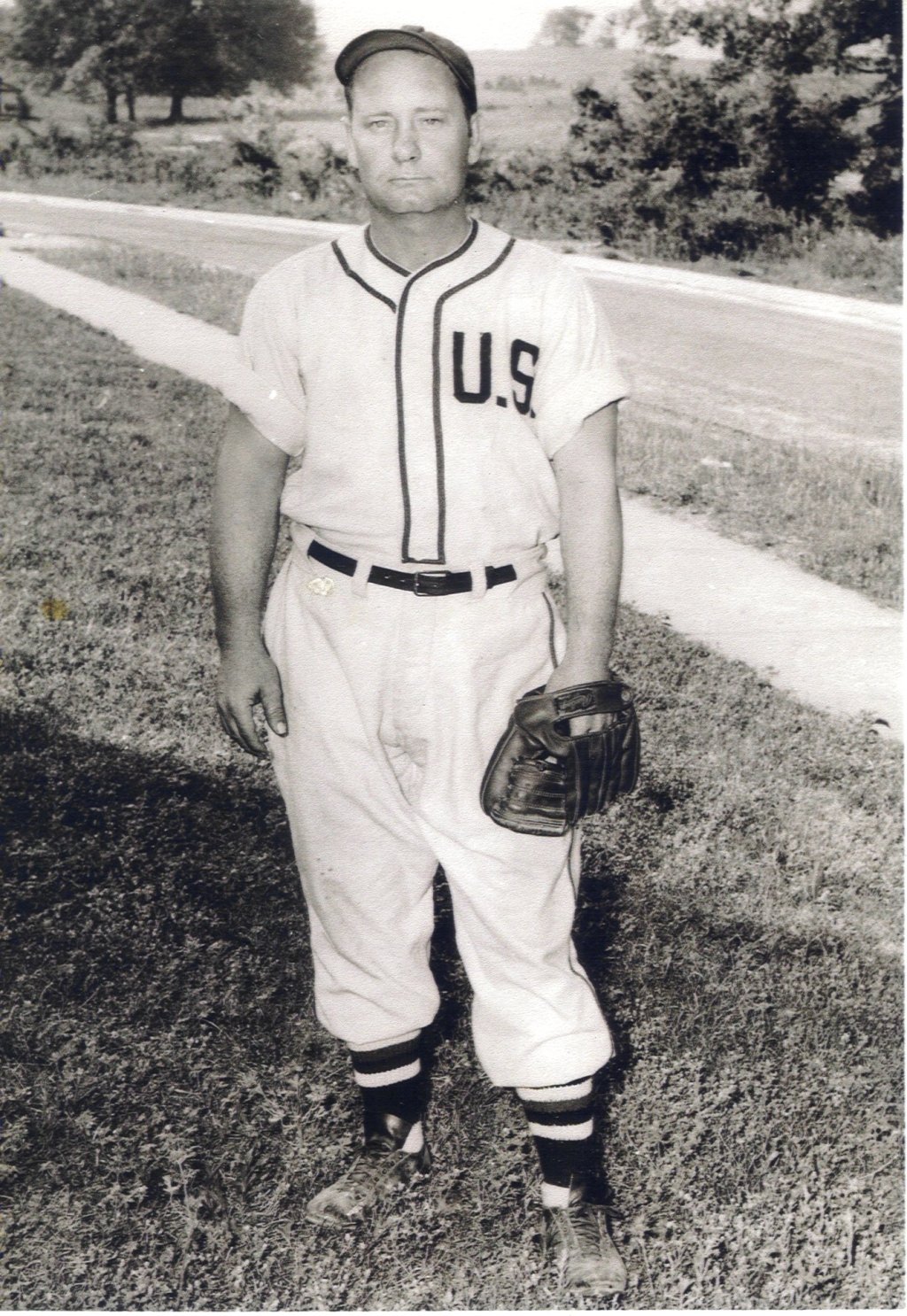
A natural athlete, my grandfather played both baseball and basketball while in the CCC. Stout and stocky, he excelled at baseball and once caught the eye of a scout representing the New York Yankees farm team. While the scout tried to get Jesse to go to the tryouts, Jesse had a sweetheart back home. Her name was Lila Mae and she’d go on to become Jesse’s wife and later, my grandmother.
Once home from the CCC, my grandfather sought employment at the local Hogansville Manufacturing Company, which produced cotton cord for the growing rubber tire industry. Hogansville Manufacturing was purchased by the United States Rubber Company during World War II to produce wartime goods, including tires and rubber soles for boots and sneakers in addition to other products. Taking note of Jesse’s baseball skills, they offered him a position with the US Rubber Company’s textile league ball club, the US Royals, in addition to a house for the family in the local mill village. I feel certain my love for baseball comes directly from my Papaw Jesse.
But back to that sweetheart, Lila Mae. A year younger than Jesse and also taking care of her younger siblings since the age of 11, she started work in the mill at 15. She once pointed to him on the ball field, looked at her friend and said, “That one’s mine!”.
And it turned out she was right. In 1937 they accompanied their friends Letha and Earl to the courthouse to serve as witnesses for their wedding; while Lila Mae and Jesse were there, they apparently got caught up in the mood and got married too! But they were afraid their mothers were going to be angry and disapprove, especially Lila Mae’s mother, Mary Lou Dicey, who went by simply, “Dice”. 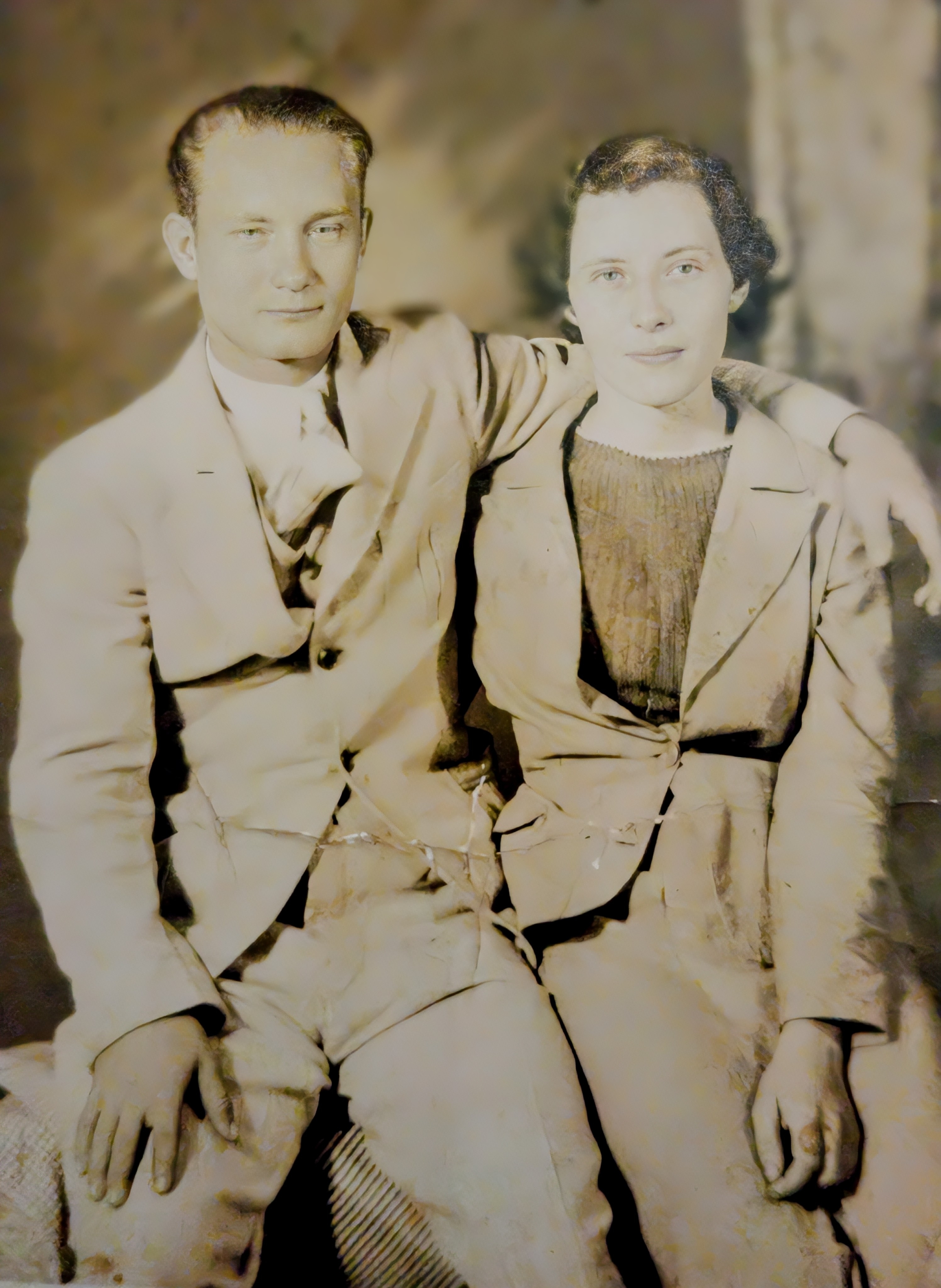
Both sets of marriage licenses were left with Letha, who kept them in her cedar chest. One day, an Aunt Gertrude came to Letha’s house and in an effort to show she and Earl had gotten married, she went to produce the marriage license; only instead of handing her Aunt Gertrude the correct papers, she handed over Lila Mae and Jesse’s marriage license. And then the cat was out of the bag–in no time, Dice learned that her oldest daughter Lila Mae was now married.
Upon learning this news, Dice promptly marched down to Jesse’s family’s house and walked into the kitchen where Jesse was having breakfast.
“I hear you’ve married my daughter”, Dice said pointedly.
“Yes, ma’am”, replied Jesse.
“Well, if you’ve married her, you’re going to live with her. Pack your bags!”
And Jesse did. He moved into the house with Dice, Lila Mae, and the rest of Lila Mae’s siblings, and instantly became the man of the house. Whatever Jesse said, that’s what Dice did, and Dice could definitely be difficult. But Jesse’s calm nature and reassuring presence smoothed out some of Dice’s edges. In 1940, my mother Janice was born, an only child.
I didn’t get to know much about my Papaw Jesse, because he was the quietest of quiet men. I do remember that he loved to watch baseball and he loved to fish, and one Christmas when I was around three or four, my parents got him a new rod and reel. They went to great lengths to disassemble it and wrap it in a large box so as not to give away the contents.
As we walked into the house with the gifts, Lila Mae saw the big one and exclaimed, “Is that one mine?!”.
Loudly I replied, “NO! That’s Papaw’s fishing pole!”, and blew the surprise (much to the aggravation of my parents). I have a distinct memory of my Papaw Jesse holding his sides laughing, his steel blue eyes twinkling.
I remember that he wore denim overalls almost every time I ever saw him. One of the few times I ever saw him dressed in a suit was at his funeral, and he didn’t quite look right so dressed up. I also remember that one of the few times he ever came to where we lived in Cleveland, Georgia, was when I had an emergency appendectomy when I was ten. He was very concerned that I would bust my stitches and have a “back-set”.
My Papaw Jesse died suddenly of a heart attack when I was twelve. At that time, I couldn’t have possibly understood the impact that his rich life experiences had on him, like growing up in the Depression, working with the CCC, and having a family and large extended family that he cared for from a relatively young age. But now that I’ve got my own sixty years behind me, I marvel at what he went through and what others of his generation sacrificed and worked incredibly hard to achieve.
And I silently thank him.
My Grandfather’s Journey: From CCC to Family Man
Discover more from Kat's Rambling Mind
Subscribe to get the latest posts sent to your email.

 Kat's Rambling Mind
Leave Your Two Cents Worth Here