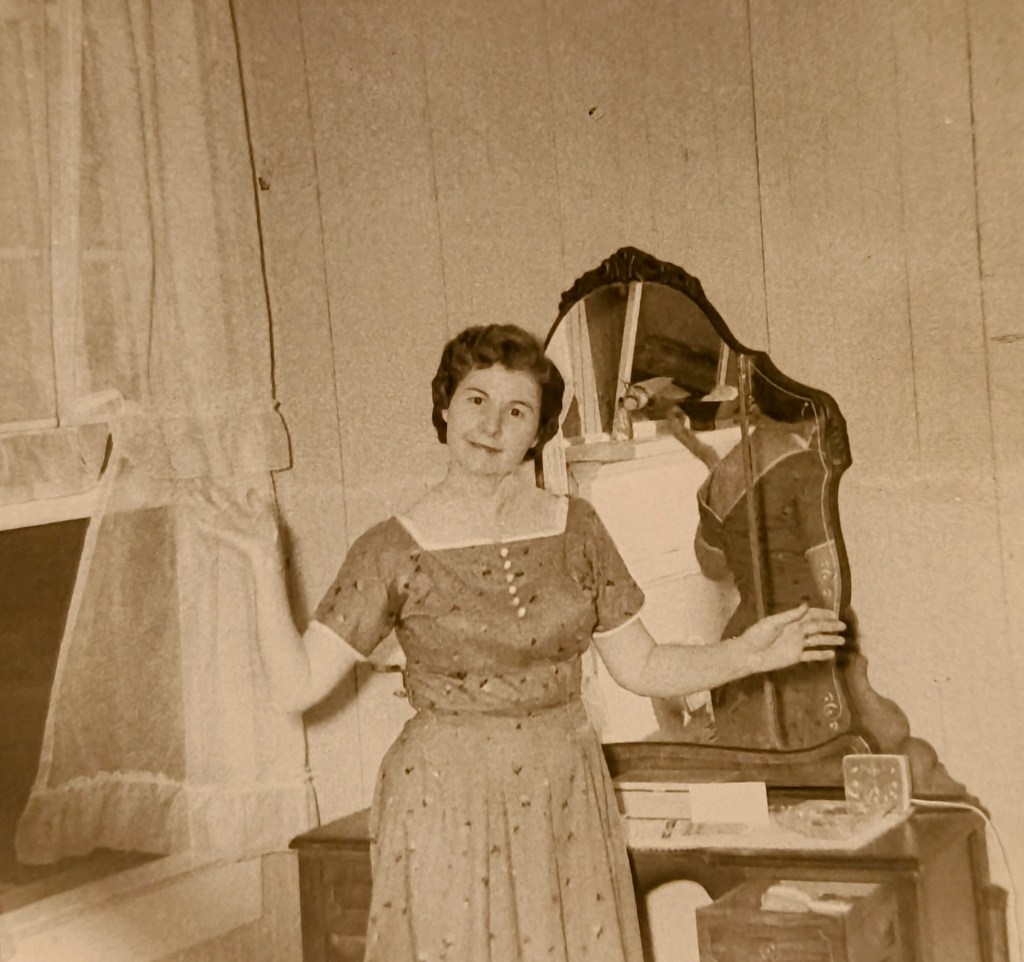
Our paternal grandmother, Sally Kate, was a beautician. Not a hair designer, nor a hairstylist…a beautician. Now, she would use the word “hairdresser” sometimes in the 1970s, as a nod to the more modern terminology, and as an acknowledgment that she could actually dress hair; but she usually described herself as a beautician, because it sounded more practical. I suppose the most formal term would be cosmetologist, since a person studies cosmetology, but it generally depends on the person and the decade they came into the industry as to what they call themselves.
Born in 1914 to Henry and Claudia, Kate graduated high school at the age of 16 in Centralhatchee, Georgia. That in itself was bit of a feat, since school was often abandoned early on in favor of work during that time period in rural west Georgia. However, her father made sure all thirteen of his surviving children graduated high school (two children died in infancy, for a total of fifteen). Education was of great value to Henry, as he was a self-made man with very little formal education himself.
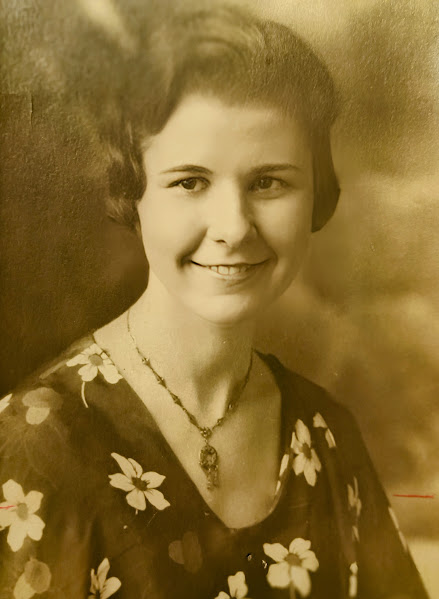
After graduation, Kate worked at the Hogansville Manufacturing Company, later the US Rubber Company mill in Hogansville, Georgia. She met my paternal grandfather Russell in that mill, and in 1934 they married. In 1937, my father Richard was born. 
In an effort to escape shift work at the mill, Kate apprenticed under a local beautician in order to acquire the hours necessary to take the Georgia state board exam and become licensed, which was required in the 1940s. Back then, beauticians wore uniforms that looked almost identical to a nurse’s uniform: white dress, or white skirt and blouse, white apron, white hosiery and shoes.
Uniforms were to be starched and pressed, with a neat coiffure and manicured nails. Cosmetology was considered to be a combination of art and science (it still is), and practitioners were expected to look very professional and clinical. I’ve always suspected the white uniforms were also worn to instill confidence in the patron’s mind of a salon’s sterility and cleanliness, but that’s just my personal observation. 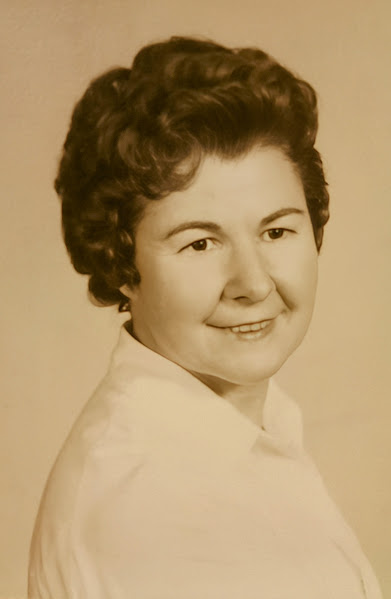
Once established as a hairdresser, Kate was a co-owner and later sole proprietor of the Royal Beauty Shop, which was located in the Hogansville Community Building. Part of the mill village, the Community Building also housed a barber shop, a bowling alley, an indoor pool, a basketball court, a movie theater, and event rooms. Designed to serve as a hub for the residents of the mill village, the presence of a beauty and a barber shop spoke volumes about the role those businesses play in any community.
After Russell suffered the first of several strokes in 1968, my grandmother eventually moved her shop to their home. It wasn’t inside the house, but was rather to the side of the house in a retrofitted modular home on their lot on Main Street in Hogansville, right next to city hall and the police station. She then called it simply “Kate’s Beauty Shop”, or more succinctly, just “Beauty Shop” when she answered the phone. The uniforms of days past were set aside in favor of more modern work attire of the 1970s. I would grow up playing in that shop, and as I got a little older, working as an assistant to Kate during my summertime visits. I don’t recall there being a sign in the yard to attract customers, but I’m sure there must have been one.
Unfortunately, I haven’t been able to find any photos of Kate’s beauty shop from the 1970s in our family photo albums. I can still picture it, though: the long rectangular trailer that sat parallel to the house, with the entrance facing the street. You would walk in and to your left were three hood dryers with chairs, with a coat rack and umbrella stand in the left hand corner. To the right, a chest-type Coca Cola cooler and chairs for waiting.
Just beyond the dryers there was a bar with a counter that extended halfway across the width of the shop; various containers held candy bars, packs of peanuts and crackers, rain bonnets, and nail files. A huge antique cash register sat at the end of the counter with a spindle beside it for keeping track of Kate ‘s tickets, which would be tallied up at the end of the day.
Behind the counter on the left were two stations with barber chairs and shampoo bowls built into the tops of the stations; on the right, a manicure station sat at the ready. A table in the waiting area held the latest fashion magazines and style books. Kate was all about staying in touch with the latest fashion, even though most of her clients had worn the same hairstyle for years, possibly decades.
In the back of the salon there was a storage room with a washer and dryer for towels and capes, the sanitizer machine for brushes and rollers, and other various supplies. In the corner there was a leftover remnant from the 1940s, a permanent wave machine. All the cables and wires that attached to your head were a gruesome sight to me as a child. It reminded me of an octopus that had somehow been electrified. Across from the storage room was a small bathroom and the decor was the standard colors of the 1970s, mainly brown, gold, and green. 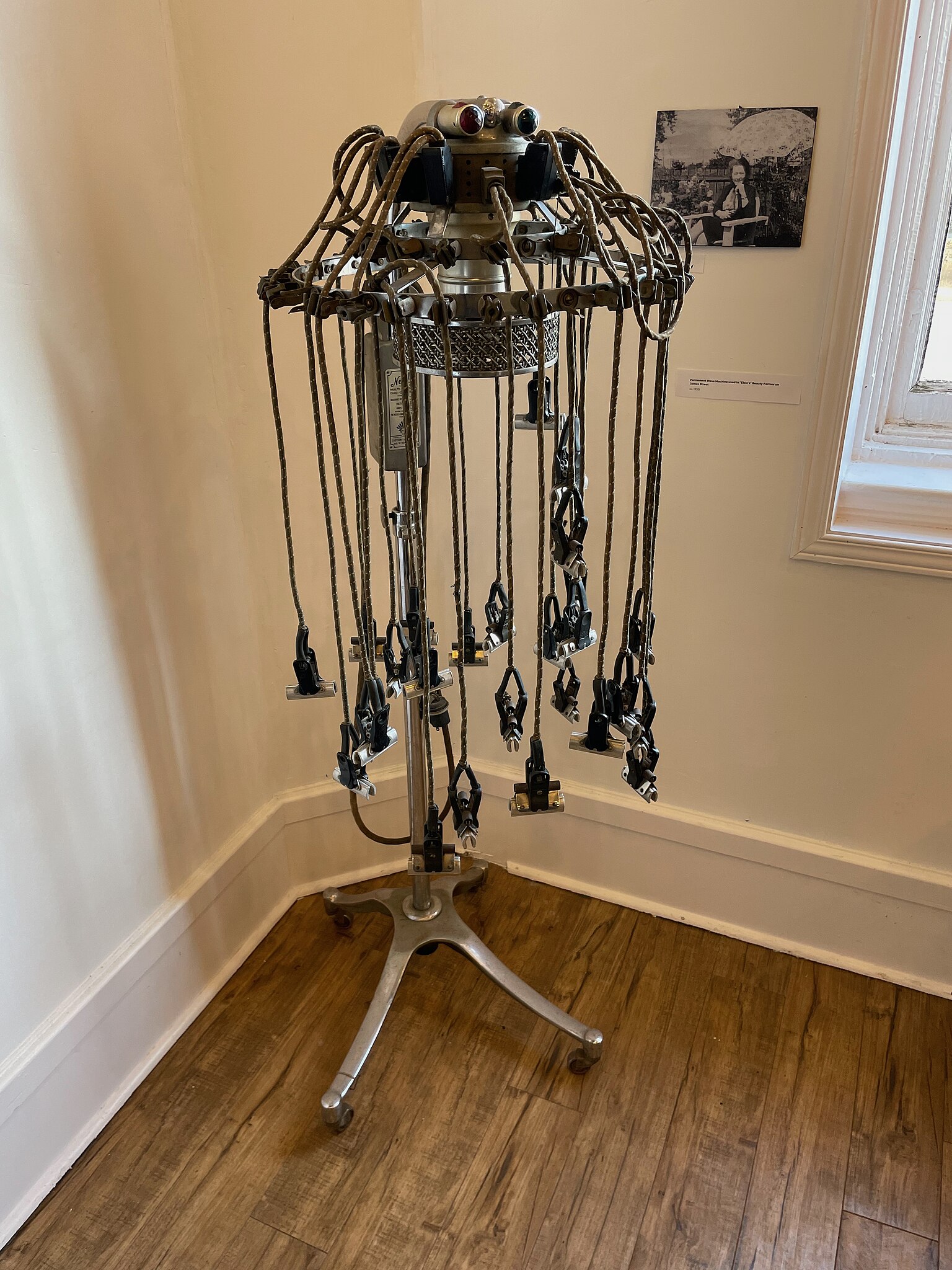
And then there were the smells of the beauty shop. After all these years, I can still walk into any shop and the smell immediately takes me back to those summer days working with Kate. It’s a combination of hairspray, perm solution, the various scents of setting lotions and potions, and shampoo. I love that smell to this day.
And I’m here to tell you, Kate had one busy beauty shop. Just as there were different terms throughout the decades for beauticians, there were also different types of beauty establishments; some called it a salon, others a studio, some even got really fancy with words like “emporium” . Kate’s was definitely a Southern beauty shop.
Kate started work in the summer around 7:30 in the morning, and would work until around 7:30 at night, with short breaks in the morning and afternoon to go into the house and check on my grandfather, who also had a caretaker who stayed during the day. But mostly, she stood behind the chair and did cuts, colors, roller sets and perms, usually working on two customers at a time.
The conversations in the shop covered a variety of topics. You could hear who was getting married, who was having a baby, who was getting divorced, and who was ill or recovering from illness. I remember there being a lot of talk about who had cancer and who didn’t, and who still had their gallbladder and who just had a heart attack, and sadly, who had just died.
Kate would often make the trip to McKibben Funeral Home in Hogansville, to help prepare those who had passed for their final journey home. I asked her once how she could work on dead people, and she told me she took great pride in being able to do that for their families; she said it was the last thing she could ever do for them, and she made sure it was done right.
When I got to be about ten years old, she would have me come down in the summer and she put me to work. She showed me how to work the washer and dryer so that I could keep the capes and towels washed, dried, and folded. When I got to be twelve, she taught me how to shampoo, roll sets and take them down, how to rinse perms, prep customers for a manicure, and of course, sweep hair and keep the shop clean. I soaked more than one customer down as I was learning to master the shampoo hose, and I nearly drowned us all once when the hose got away from me completely.
I would always sleep well on those summer visits, because I was usually genuinely tired from keeping up with Kate. But I felt such a sense of accomplishment after working all day. I felt so mature and grown-up. (I wasn’t, but I felt that I was.) The combination of responsibility and being treated as an (almost) teenager was heady stuff.
After a long day at the shop, we’d go to the house, and if it was too late to go to the cafe across the railroad tracks, she’d pull out a cast iron skillet and make us hamburgers. (Including one for her dachshund, Mutt.) And there we’d be, two working gals reflecting on the day, eating their hamburgers and maybe having a little watermelon or ice cream afterwards. It’s a nice memory of mine, and I learned a lot in that shop.
I learned the value of service to a community, in addition to serving a clientele of varied interests and personalities. You’re there for their good times, their bad times, and all their milestones. I learned how to deal with the public, and how to take payments with a smile, and how to make change. (You’d be surprised at what a valuable skill making change has turned out to be.) I learned about work ethic from a woman who came from a different generation, when work ethic meant something on a completely different level than today.
I learned how to conduct myself in a business; there was no running, horseplay, or playing on the equipment in the beauty shop. It was a professional place with a purpose. I later carried that purpose with me as I became a hairdresser in the mid 1980s, and I tried to maintain the same sense of professionalism that I witnessed growing up in Kate’s shop.
Kate retired in 1984, and moved to Cleveland, Georgia to live near our family. She stayed busy until osteoporosis finally made things more difficult for her. I was proud to carry on the tradition of being a female business owner in the 1990s through the mid 2000s. I sold my business in 2005 and moved on to other things, but the lessons I learned in Kate’s Beauty Shop are with me now and will be with me always.


 Kat's Rambling Mind
Leave Your Two Cents Worth Here